
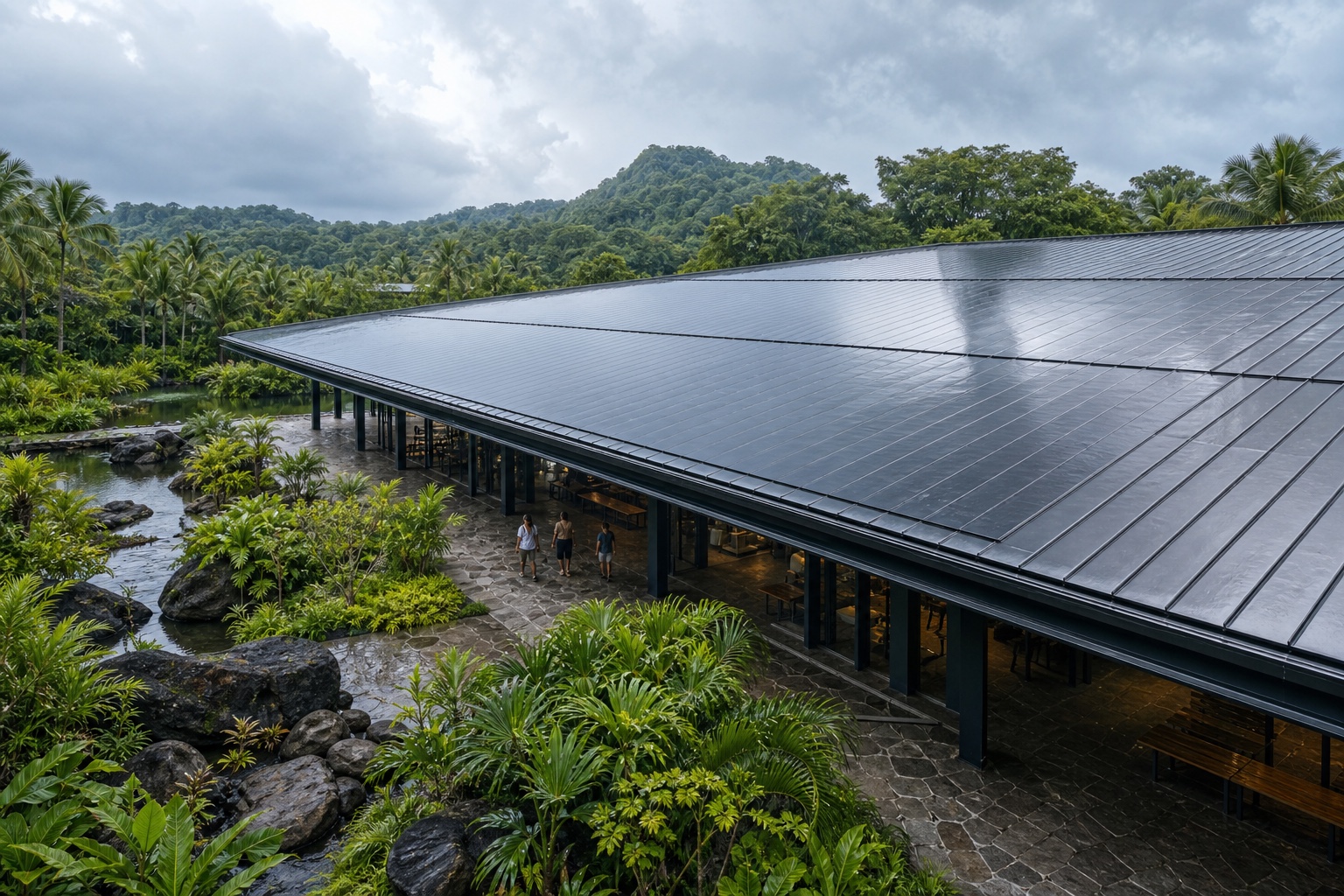
GENERATIVE APPLICATION VISUAL · FACTORY-GROUNDED PRODUCT FORM · NOT A COMPLETED PROJECT
Opportunity IdentifiedOP-005
Building-Integrated Photovoltaic System (BIPV)
A roof-envelope and energy system being screened for projects that need generation, weather protection, drainage and architectural integration in one coordinated assembly.
VietnamIndonesiaMalaysiaThailand
It is simultaneously a facade and an electrical system
01
Quick orientation
02
Why this is an opportunity product
A product earns attention only when market demand, climate, supply, project delivery, commercial logic and compliance can be considered together.
A roof-envelope and energy system being screened for projects that need generation, weather protection, drainage and architectural integration in one coordinated assembly.
- Generates electricity from envelope area
- Can combine shading and weather protection
- Strong architectural differentiation
- China has a deep PV, glass, inverter and facade supply base, while project-specific fire, electrical, structural and weatherproofing evidence remains essential.
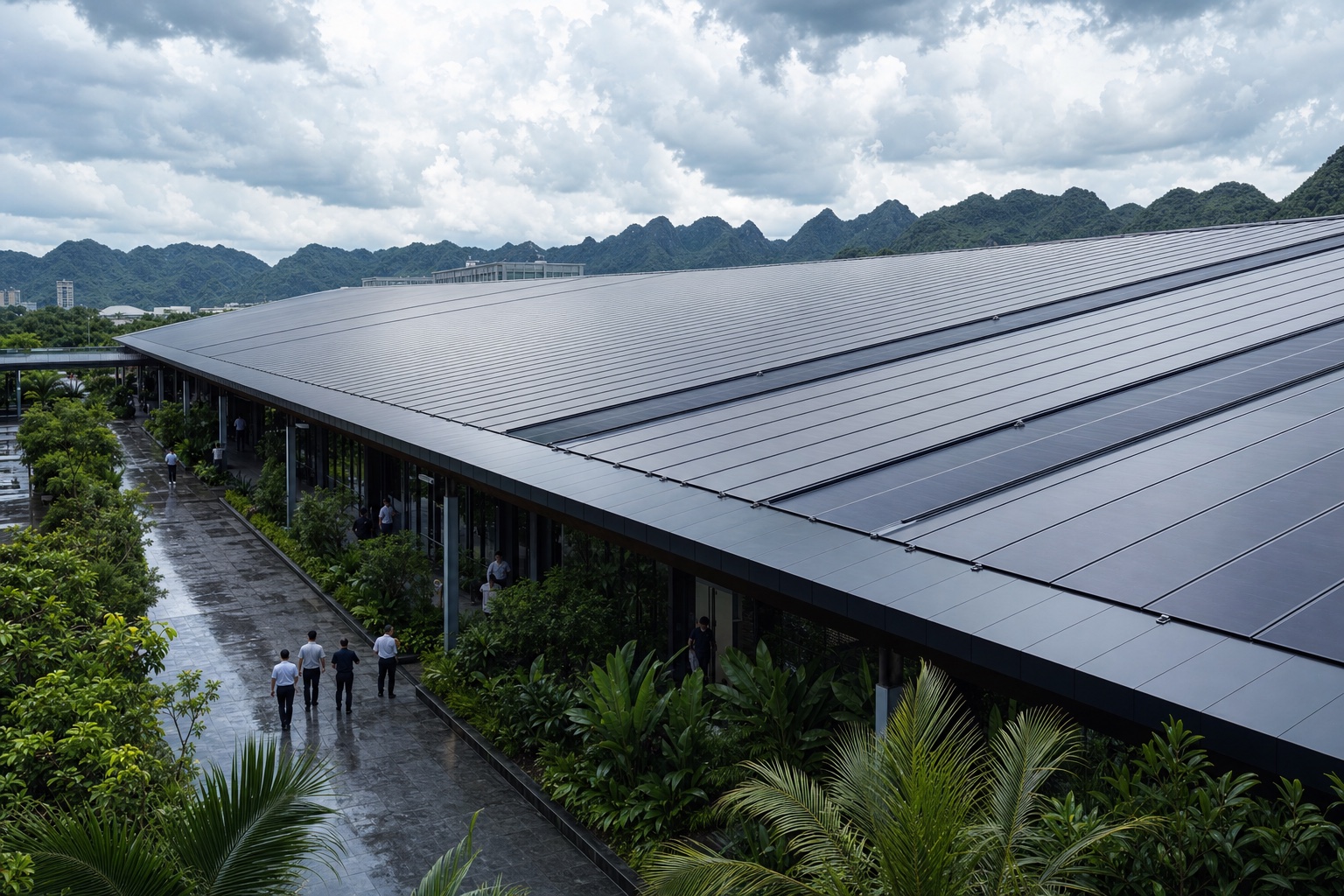 GENERATIVE APPLICATION VISUAL · FACTORY-GROUNDED PRODUCT FORM · NOT A COMPLETED PROJECT
03
Opportunity analysis
5/5
Market Demand
UBI market assessment
4/5
Climate Fit
UBI market assessment
5/5
Configuration Breadth
UBI market assessment
4/5
Project Fit
UBI market assessment
5/5
Commercial Potential
UBI market assessment
5/5
Compliance Complexity
Pending verification
UBI preliminary market judgement. It is not an investment-return guarantee.
04
Alternatives and selection boundary
No product is universally superior; selection depends on exposure, duty, interfaces, programme, service life and maintenance.
| System | Environmental basis | Delivery | Typical project | Key caveat |
|---|---|---|---|---|
| Conventional baseline system | Known local practice | Depends on wet trades and site sequence | Projects prioritizing familiar approvals and service networks | May not solve the opportunity problem identified here |
| Building-Integrated Photovoltaic System (BIPV) | Requires product and system verification | Potentially modular or faster after design freeze | Technology and advanced-manufacturing roofs · Logistics and warehouse roofs · Science and convention campuses · Large public metal roofs | It is simultaneously a facade and an electrical system |
| Premium imported system | Evidence may be stronger for a defined model | Longer procurement and replacement lead time may apply | Projects prioritizing established international references | Higher cost does not remove project-interface risk |
It is simultaneously a facade and an electrical system · Yield, fire, glass safety and replacement strategy require coordinated design · Not every orientation or shaded surface is viable
05
Application scenarios
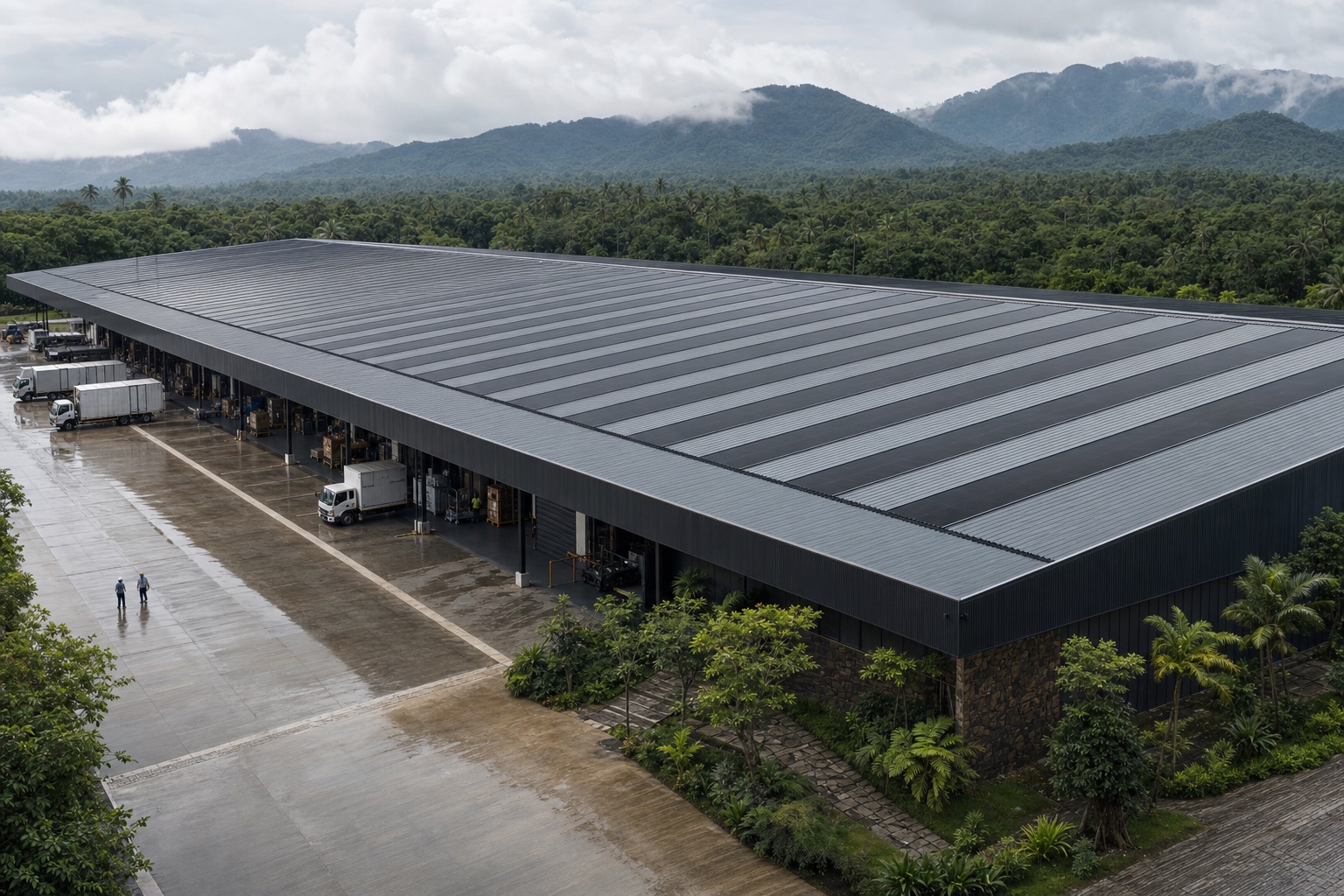
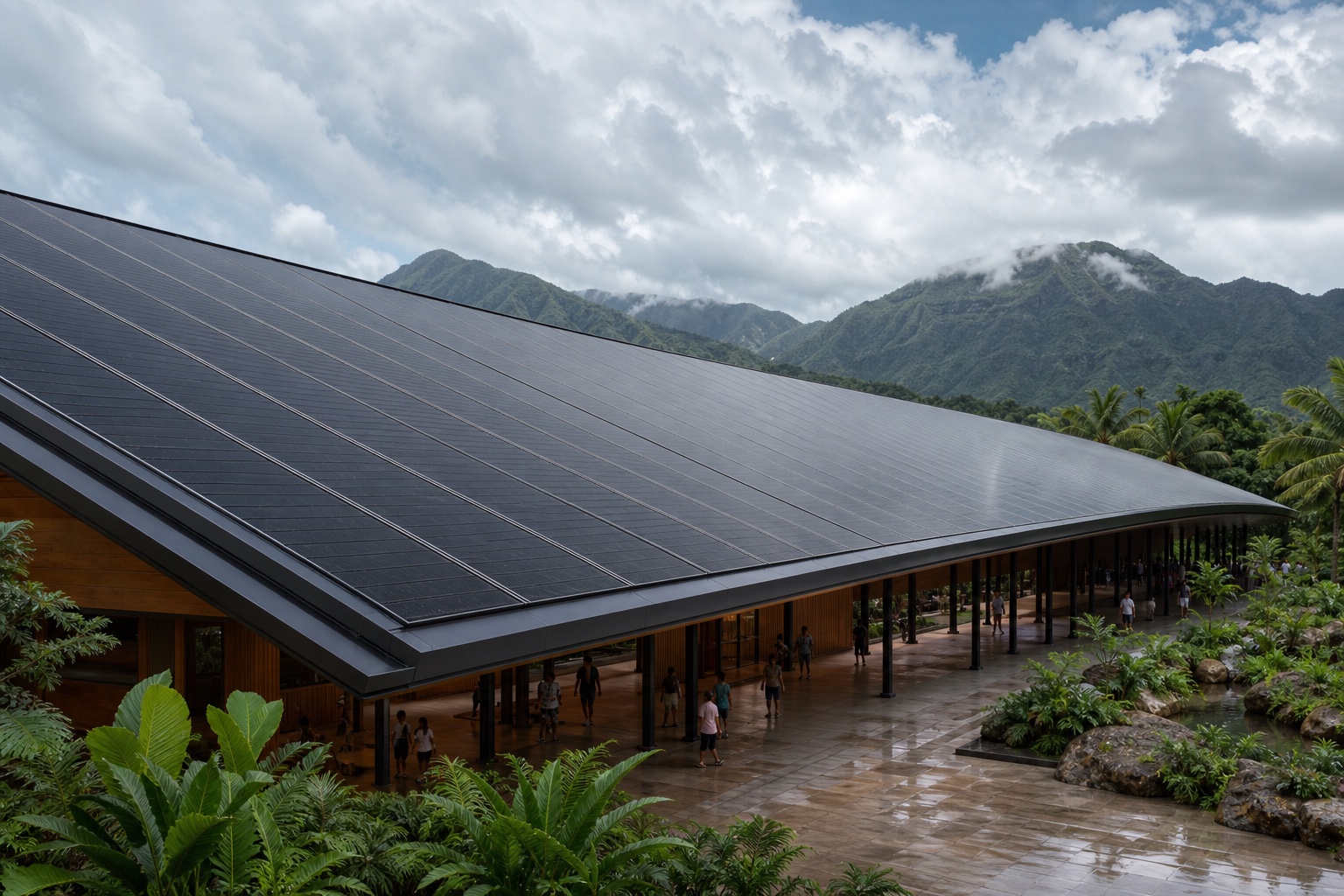
Original application images communicate design intent and system boundaries; they are not photographed completed projects.
SYSTEM · Pending Verification
Technology and advanced-manufacturing roofs
Factory-grounded generated application illustration; it is not presented as a photographed completed project. Final design and system evidence remain project-specific.
SYSTEM · Pending Verification
Logistics and warehouse roofs
Factory-grounded generated application illustration; it is not presented as a photographed completed project. Final design and system evidence remain project-specific.
SYSTEM · Pending Verification
Science and convention campuses
Factory-grounded generated application illustration; it is not presented as a photographed completed project. Final design and system evidence remain project-specific.
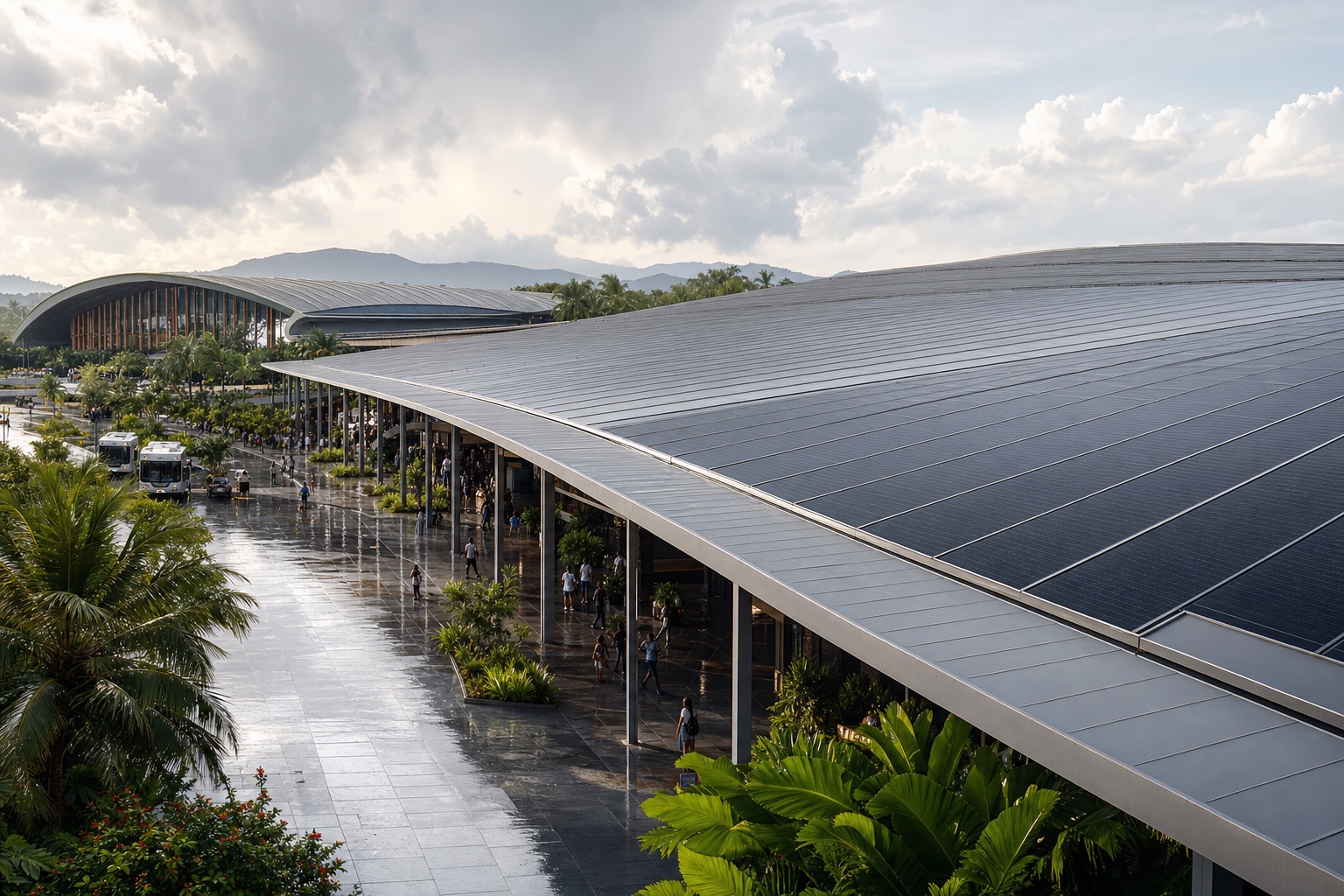
SYSTEM · Pending Verification
Large public metal roofs
Factory-grounded generated application illustration; it is not presented as a photographed completed project. Final design and system evidence remain project-specific.
Priority applications
- Technology and advanced-manufacturing roofs
- Logistics and warehouse roofs
- Science and convention campuses
- Large public metal roofs
Project conditions
- Project-specific design basis
- Current supplier documentation
- Local code and approval review
- Commissioning and maintenance plan
Not recommended without specific design review
It is simultaneously a facade and an electrical system · Yield, fire, glass safety and replacement strategy require coordinated design · Not every orientation or shaded surface is viable
06
Southeast Asian climate fit
High humidity, monsoon rain, condensation, coastal exposure, solar gain and substrate moisture must be considered as a system.
Heat and high humidity
- Potential advantage
- Combines envelope and energy functions, but value depends on yield, replacement, access and lifecycle design rather than installed wattage alone.
- Remaining limitation
- It is simultaneously a facade and an electrical system
- Design & installation response
- Confirm tropical design conditions, product data and assembly behaviour before specification.
Monsoon rain and condensation
- Potential advantage
- Generates electricity from envelope area
- Remaining limitation
- Yield, fire, glass safety and replacement strategy require coordinated design
- Design & installation response
- Design drainage, weather protection, vapour control and inspection access as applicable to the complete system.
Coastal exposure and dispersed logistics
- Potential advantage
- Modular Chinese supply may support phased delivery when packaging and spares are controlled.
- Remaining limitation
- Not every orientation or shaded surface is viable
- Design & installation response
- Verify corrosion class, transport limits, replacement strategy and local service capability.
07
System architecture
A functional system diagram for opportunity screening; exact supplier construction and interfaces must be confirmed.
1PV laminated glass or module
2Facade framing and weather seals
3DC cabling, isolation and junctions
4Inverter, monitoring and grid interface
01PV laminated glass or module
Functional component in the preliminary system architecture; exact material, rating and interface require supplier confirmation.
02Facade framing and weather seals
Functional component in the preliminary system architecture; exact material, rating and interface require supplier confirmation.
03DC cabling, isolation and junctions
Functional component in the preliminary system architecture; exact material, rating and interface require supplier confirmation.
04Inverter, monitoring and grid interfaceOptional
Functional component in the preliminary system architecture; exact material, rating and interface require supplier confirmation.
08
Principal materials and components
Primary system components
- PV laminated glass or module
- Facade framing and weather seals
- DC cabling, isolation and junctions
- Inverter, monitoring and grid interface
Required evidence
- Product data and drawings
- Material / component traceability
- Applicable safety and performance reports
- SDS or environmental declarations where relevant
Specific formulation, proportions and chemical content must follow manufacturer technical data, SDS and third-party reports.
09
Manufacturing or integration process
- 01Solar and envelope feasibility
- 02Module and facade co-design
- 03Mock-up and safety testing
- 04Factory quality and traceability
- 05Installation, energization and monitoring
Quality control that materially affects results
Incoming material and component identity · Critical dimensions and interfaces · Safety and performance test records · Batch / serial traceability · Packaging, protection and release documents
10
Configurations and model families
Configuration families support early project screening. Final models, capacities, finishes and interfaces require a current supplier matrix and project selection.
PV curtain-wall spandrel
Configuration family for project screening; capacity, dimensions, finish and compliance remain supplier- and project-specific.
- OP-005-C1Base configurationPending supplier matrix
- OP-005-P1Project configurationTo be engineered
Semi-transparent PV canopy
Configuration family for project screening; capacity, dimensions, finish and compliance remain supplier- and project-specific.
- OP-005-C2Base configurationPending supplier matrix
- OP-005-P2Project configurationTo be engineered
Photovoltaic roof or tile system
Configuration family for project screening; capacity, dimensions, finish and compliance remain supplier- and project-specific.
- OP-005-C3Base configurationPending supplier matrix
- OP-005-P3Project configurationTo be engineered
11
Technical specifications
Nominal powerProject-specific / supplier confirmation requiredPending Verification
Visible light transmissionProject-specific / supplier confirmation requiredPending Verification
Solar heat-gain performanceProject-specific / supplier confirmation requiredPending Verification
Glass safety build-upProject-specific / supplier confirmation requiredPending Verification
Wind and structural capacityProject-specific / supplier confirmation requiredPending Verification
Fire and electrical classificationProject-specific / supplier confirmation requiredPending Verification
12
Balanced assessment
Potential advantages
- Generates electricity from envelope area
- Can combine shading and weather protection
- Strong architectural differentiation
Real constraints
- It is simultaneously a facade and an electrical system
- Yield, fire, glass safety and replacement strategy require coordinated design
- Not every orientation or shaded surface is viable
13
Service life and warranty
- Supplier warranty duration and exclusions pending
- System-interface responsibility must be allocated contractually
- Performance guarantee requires an agreed test and acceptance method
14
Installation, commissioning and maintenance
Before procurement
- Confirm duty, exposure and interfaces
- Review supplier evidence and exclusions
- Coordinate local approval route
Delivery and installation
- Inspect identity, condition and traceability
- Follow approved drawings and method statement
- Record hidden works and critical interfaces
Commissioning and handover
- Complete applicable functional tests
- Close defects and document final configuration
- Train operators and issue maintenance plan
15
Product-specific system module
BIPV requires one coordinated design for drainage, structural movement, fire stopping, DC routing, isolation, replacement and maintenance access.
DEEP SYSTEM · Pending Verification
Envelope–electrical interface
China has a deep PV, glass, inverter and facade supply base, while project-specific fire, electrical, structural and weatherproofing evidence remains essential.
- Technology and advanced-manufacturing roofs
- Logistics and warehouse roofs
- Science and convention campuses
- Large public metal roofs
- Project design basis and interfaces
- Current supplier drawings and test evidence
- Mock-up, FAT or performance verification as applicable
- Commissioning, handover and maintenance plan
- It is simultaneously a facade and an electrical system
- Yield, fire, glass safety and replacement strategy require coordinated design
- Not every orientation or shaded surface is viable
16
Country recommendation index
The country recommendation index combines climate and material fit, project demand, installation and maintenance, compliance complexity and local case evidence. It is an updateable UBI assessment—not a market-size, sales or investment-return forecast.
91/100
PrimaryVietnam
Preliminary fit based on the Southeast Asian application hypothesis for Building-Integrated Photovoltaic System (BIPV); current supplier, code and local-project evidence still requires verification.
- BEST FIT
- Technology and advanced-manufacturing roofs · Logistics and warehouse roofs · Science and convention campuses · Large public metal roofs
- EVIDENCE STATUS
- Pending Verification
88/100
PrimaryIndonesia
Preliminary fit based on the Southeast Asian application hypothesis for Building-Integrated Photovoltaic System (BIPV); current supplier, code and local-project evidence still requires verification.
- BEST FIT
- Technology and advanced-manufacturing roofs · Logistics and warehouse roofs · Science and convention campuses · Large public metal roofs
- EVIDENCE STATUS
- Pending Verification
84/100
SecondaryMalaysia
Preliminary fit based on the Southeast Asian application hypothesis for Building-Integrated Photovoltaic System (BIPV); current supplier, code and local-project evidence still requires verification.
- BEST FIT
- Technology and advanced-manufacturing roofs · Logistics and warehouse roofs · Science and convention campuses · Large public metal roofs
- EVIDENCE STATUS
- Pending Verification
82/100
SecondaryThailand
Preliminary fit based on the Southeast Asian application hypothesis for Building-Integrated Photovoltaic System (BIPV); current supplier, code and local-project evidence still requires verification.
- BEST FIT
- Technology and advanced-manufacturing roofs · Logistics and warehouse roofs · Science and convention campuses · Large public metal roofs
- EVIDENCE STATUS
- Pending Verification
80/100
SecondarySingapore
Preliminary fit based on the Southeast Asian application hypothesis for Building-Integrated Photovoltaic System (BIPV); current supplier, code and local-project evidence still requires verification.
- BEST FIT
- Technology and advanced-manufacturing roofs · Logistics and warehouse roofs · Science and convention campuses · Large public metal roofs
- EVIDENCE STATUS
- Pending Verification
78/100
WatchlistPhilippines
Preliminary fit based on the Southeast Asian application hypothesis for Building-Integrated Photovoltaic System (BIPV); current supplier, code and local-project evidence still requires verification.
- BEST FIT
- Technology and advanced-manufacturing roofs · Logistics and warehouse roofs · Science and convention campuses · Large public metal roofs
- EVIDENCE STATUS
- Pending Verification
72/100
WatchlistCambodia
Preliminary fit based on the Southeast Asian application hypothesis for Building-Integrated Photovoltaic System (BIPV); current supplier, code and local-project evidence still requires verification.
- BEST FIT
- Technology and advanced-manufacturing roofs · Logistics and warehouse roofs · Science and convention campuses · Large public metal roofs
- EVIDENCE STATUS
- Pending Verification
17
Procurement decision chain
Owner / developerArchitect / consultantMain contractor / EPCMEP / specialist contractorOperator / facility manager
- 1Define project problem
- 2Confirm design basis
- 3Screen suppliers
- 4Review evidence
- 5Mock-up / FAT
- 6Contract and delivery
- 7Commission and monitor
18
What UBI can provide
01Product–project matching
02Multi-factory quotation
03Samples and mock-up coordination
04BOQ and specification matching
05OEM / ODM
06Quality inspection
07Certification review
08Cross-border logistics
09Customs-document coordination
10Local partner cooperation
19
Project evidence archive
Evidence is tiered. ‘Verified Project’ means UBI checked a project-specific contractor or system-provider document; it does not mean UBI inspected the site. ‘Manufacturer Reference’ remains a supplier declaration until owner, architect or handover evidence is obtained.
0emerging-market project references0project-specific source documents
20
Certification and document center
Technical data sheetEN / project language · Supplier document pending
Pending VerificationSystem drawingsEN / project language · Supplier document pending
Pending VerificationInstallation / commissioning manualEN / project language · Supplier document pending
Pending VerificationSafety and performance reportsEN / project language · Supplier document pending
Pending VerificationWarranty termsEN / project language · Supplier document pending
Pending VerificationOperation and maintenance manualEN / project language · Supplier document pending
Pending Verification21
Frequently asked questions
01Is this product project-ready?
It is currently an opportunity-identified product. Supplier, technical, compliance and project evidence remains pending.
02Are the images completed projects?
No. They are generated application illustrations used to communicate design intent and system boundaries.
03Can UBI provide a quotation now?
UBI can start supplier screening and clarification after receiving the country, project type, duty, quantity and delivery programme.
04Which documents are required?
The document center lists the minimum technical, safety, installation, warranty and O&M package; exact requirements depend on the project and jurisdiction.
05How is the country index calculated?
It combines climate fit, project demand, delivery practicality, compliance complexity and available local evidence. It is not a sales or investment-return forecast.
22
Sources, verification and disclaimer
Sources
User-supplied workbook: SEA_Green_Building_Materials_Opportunity_Analysis.xlsxAccessed 2026-07-12 · Pending Verification · Pending Verification · Pending Verification · UBI Research · 2026-07-12
Last updated
2026-07-12
Pending VerificationDisclaimer
This page presents a product and market opportunity. It is not investment advice or a final technical commitment. Final specifications, certification, warranty, lead time and pricing are governed by signed contracts and supplier documents.